Cronometer — product-design research dossier
Research date: October 7, 2026. Scope: public documentation and official demonstration screenshots, not hands-on app testing. Basic, Gold and Pro are separate product contexts. Mobile documentation generally covers both phone platforms; screenshot platform is identified separately. Numerical citations map to the isolated citation ledger; [6] corresponds to cr-06 in app.json.
1. Product thesis and evidence boundaries
Cronometer's central object is a date-indexed diary rather than a prescribed meal plan.[9] Food, exercise, biometric and note records contribute to a daily picture, with summaries above the diary and additional actions behind gestures and menus.[9] The product-design implication is that accurate capture, correction and interpretation matter together: a fast entry that distorts later reporting is not a successful end-to-end experience.
Its distinction is not simply a larger food catalog. The vendor differentiates research/laboratory-derived food composition from branded nutrition labels and privately created records.[20] Community submissions undergo curation before publication, but a curated branded entry can still contain fewer nutrients than a generic research entry.[20] This is a provenance-and-coverage model, not evidence that all displayed values have identical certainty.
The Foods library separates custom foods, meals and recipes, alongside repeat items and nutrient-oriented discovery tools.[47] This creates a reusable knowledge layer above individual diary events. Design evaluation should ask whether users understand when they are changing one occurrence, a reusable definition or an entire historical series.
This dossier reads 48 official help articles, retains their complete extracted text, and visually inspects 12 official screenshots. No signup, purchase, authenticated record, native build or external synchronization was exercised. Screens are evidence of depicted controls, not proof of working persistence. Source updated_at values are retained but must not be mistaken for screenshot capture dates or app-release versions. The gallery preserves original files and provides separately labeled research annotations.
2. Tiers, platforms and information architecture
Basic is an ongoing free account, not merely a trial: the subscription guide includes source nutrition data, custom foods/recipes, selected integrations, diary groups and raw-data export.[1] Gold adds automation, advanced analysis, sharing and other convenience features.[1] Pro is a professional client-management subscription that also supplies personal/client Gold access; it is not a synonym for the consumer premium tier.[1] Mobile's depicted bottom navigation is Discover, Diary, the central add action, Foods and More.[10] Diary is documented as the opening destination, while Discover's dashboard can be configured separately.[9][23] The screenshots show both detail-first screens and tabbed review areas.[4][21] This combines a daily operational surface with secondary interpretation surfaces rather than forcing every task into one home feed.
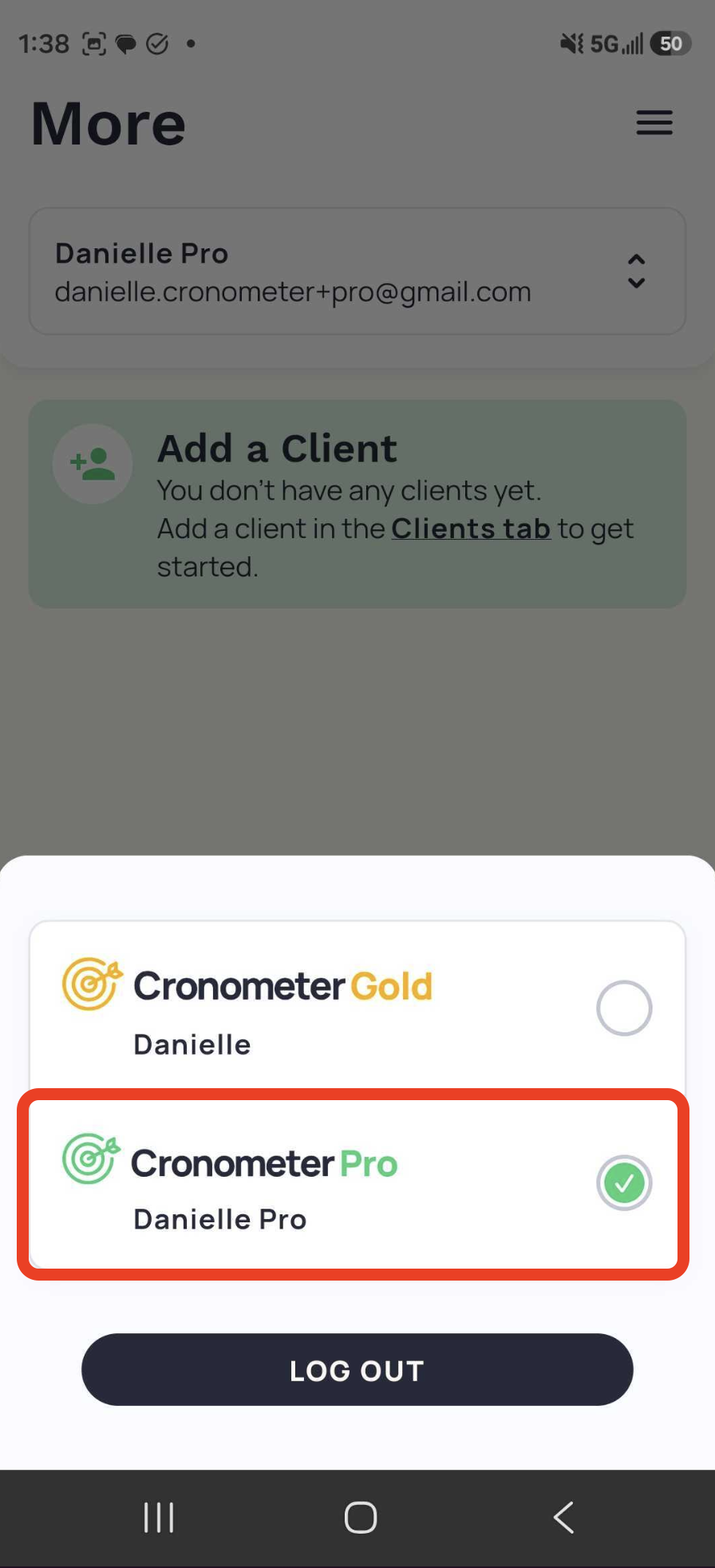
Web onboarding routes target configuration through More → Targets + Profile, device connections through More → Devices, and analysis through Trends.[3] It also supports Diary and Foods workflows.[3] Do not mechanically copy phone navigation labels into desktop flow diagrams. The web account surface is especially important for export, payment management and deletion.[28] There is an important documentation contradiction: the general Pro getting-started article says the professional interface is web-only, while a dedicated Pro Mobile guide explicitly explains iOS/Android client management.[37][36] The specific mobile guide, plus its actual Android profile-switcher image, supports mobile availability more directly.[36] The older assertion is recorded as conflicting evidence rather than silently discarded.
No universal subscription price is asserted. Checkout currency, geography, store purchase channel and promotional entitlements were not tested. Likewise, a feature page that omits a paid gate is not equivalent to an independently verified Basic entitlement; ambiguous entries are labeled accordingly in the structured matrix.
3. First-run setup and target comprehension
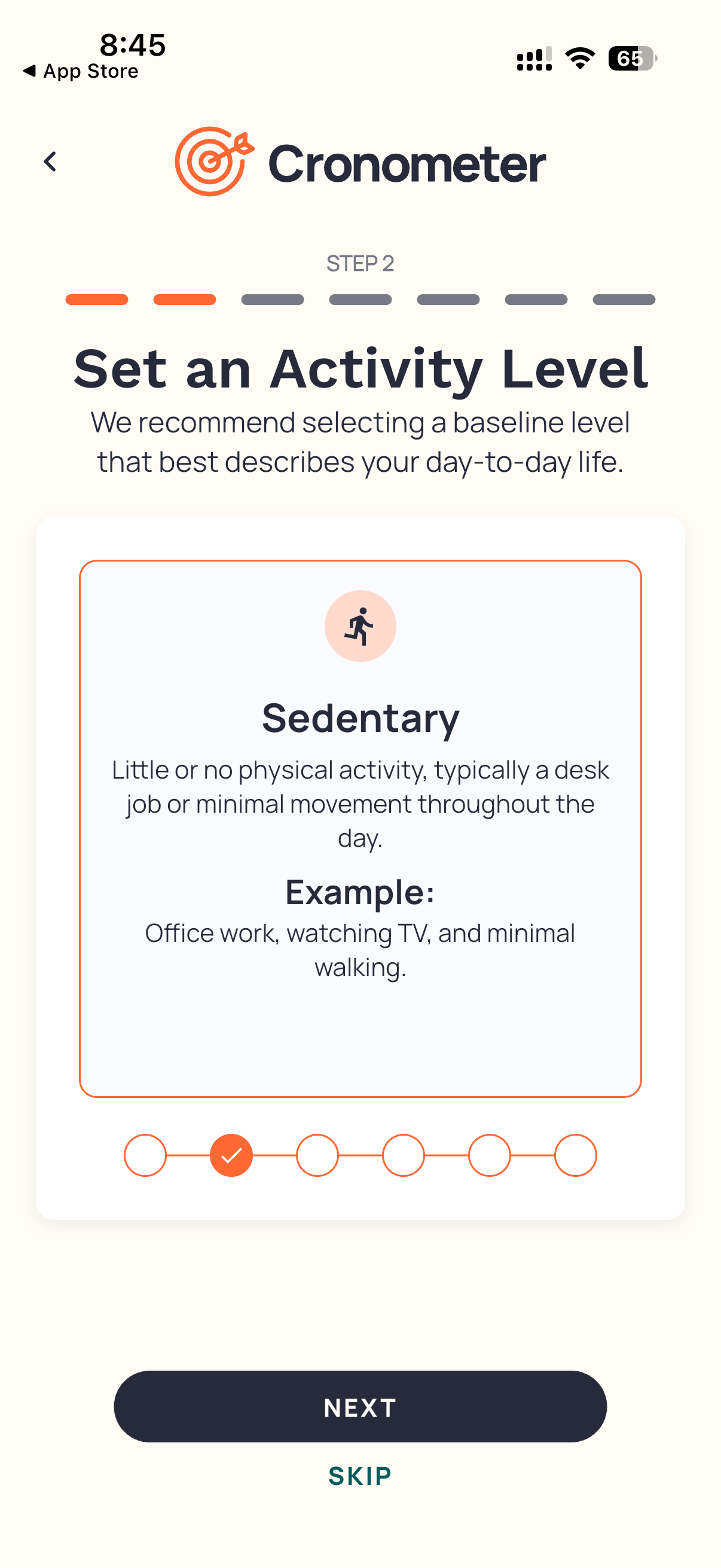
Mobile setup requests personal details, activity level, weight goal and desired rate, presents a plan/forecast, then finishes account credentials, terms and email validation.[2] The inspected activity screen shows an explicit step indicator, a discrete selection control with descriptive context, a dominant Next action and a secondary Skip.[2] That is evidence of progressive disclosure, not a measured abandonment or conversion effect.
Returning users adjust weight goals through More → Targets → Weight Goal.[17] Changing the intended rate changes the energy target and forecast; a lower-energy range can trigger a review acknowledgment.[17] The overview can also appear on the dashboard.[17] The responsible critique is discoverability and comprehension of this safeguard, not a claim that the recommended target is clinically suitable for an individual.
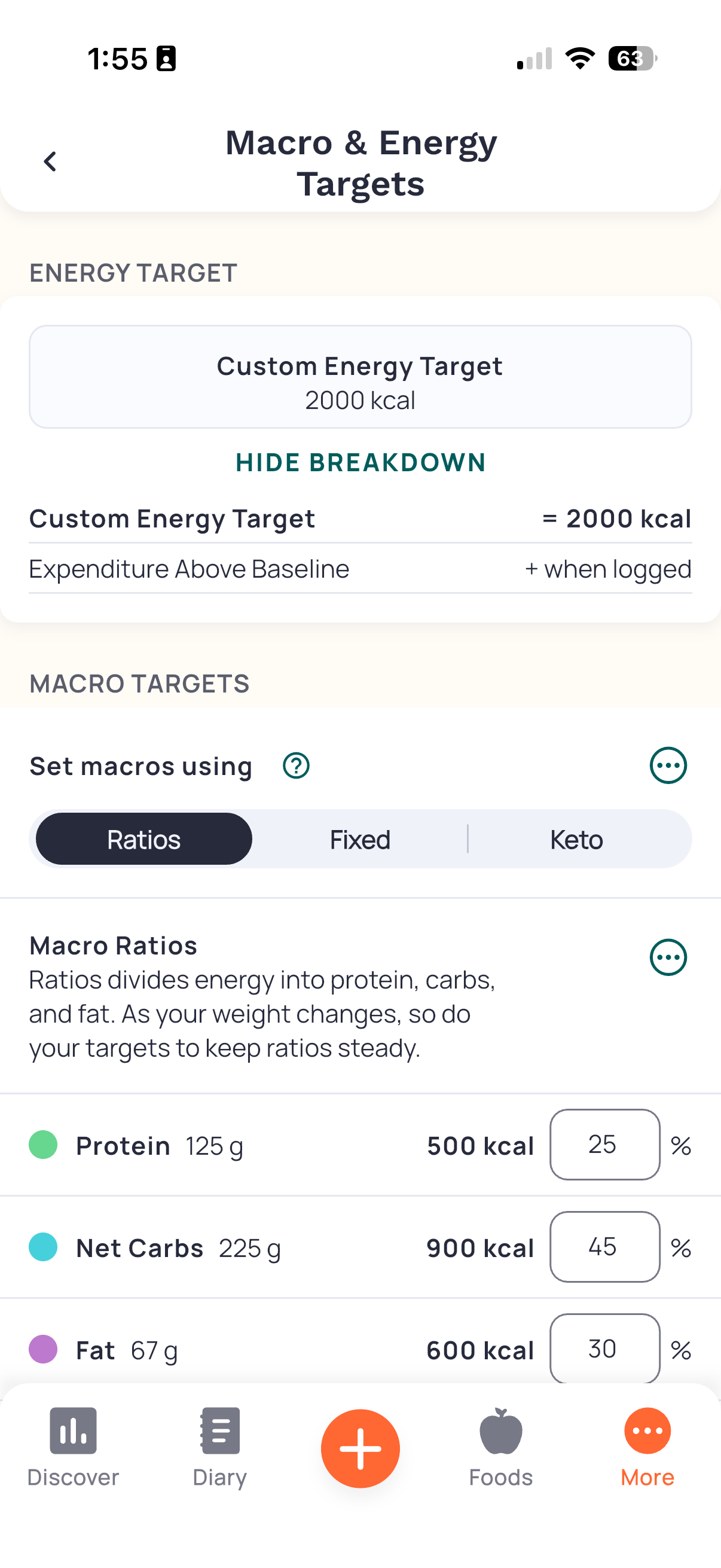
Macro configuration supports ratios, fixed targets and a keto calculation.[16] Energy can follow the weight goal or a custom target; selecting custom energy deactivates the weight-goal setting.[16] An independent advanced option determines whether expenditure above baseline increases the target.[16] The inspected screen makes the arithmetic expandable, an important transparency affordance when an allowance changes during the day.[16]
Fixed macros can be expressed in grams or calories.[44] Their aggregate energy need not match a separately configured weight-goal energy target; the help explicitly describes aligning them through a custom energy value if desired.[44] A parity comparison should distinguish editable macro grams from a coherent, automatically reconciled calorie prescription.
Expenditure is estimated from BMR, baseline activity, tracker activity, exercise and optional thermic effect of food.[18] The documented default BMR uses profile information, and incoming activity adjusts baseline components.[18] This is dynamic energy accounting. It does not establish an algorithm that learns expenditure from longitudinal intake and weight change. Calling it equivalent to an adaptive coaching algorithm would overstate the evidence.
Individual nutrient settings expose a daily target, maximum threshold and visibility.[19] Some nutrients are hidden because source coverage is sparse; reported intake may underestimate actual intake.[19] Designers should treat missing data and unmet targets as different states. A visually precise progress bar cannot remove the uncertainty created by incomplete source composition.
4. Core capture: select, inspect, commit
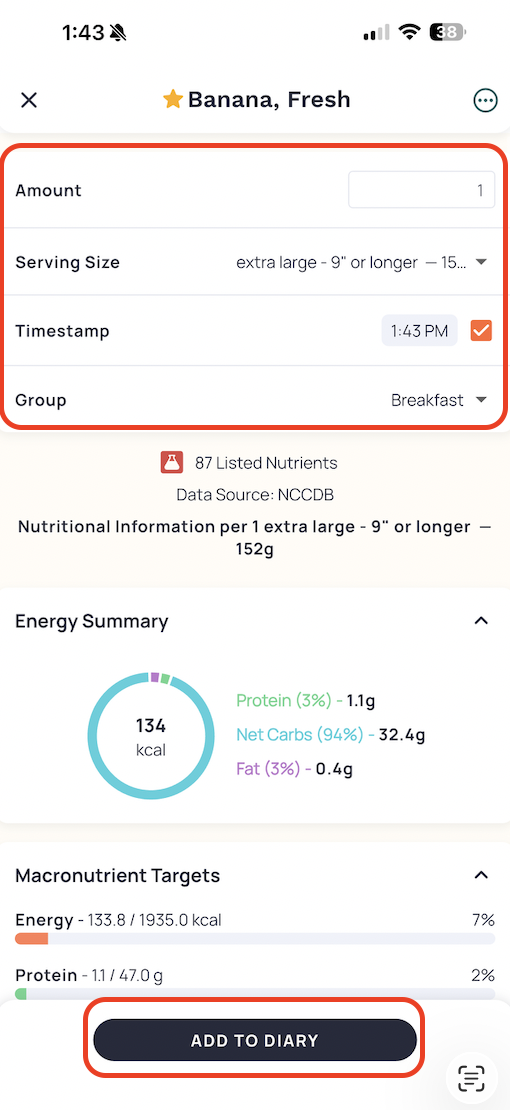
Food search supports category and database filters, favorites and a multi-add review stage.[4] Food detail combines serving controls with nutrient information and source provenance.[4] The inspected banana example shows amount, serving unit, timestamp and group above the data source, then nutrition and a fixed bottom commit button.[4] This makes portion selection part of verification rather than an afterthought.
Barcode lookup is a phone-camera workflow with a manual-number fallback.[5] A missing code branches into custom-food creation and label/package photography.[5] The documented automatic nutrition/serving fill applies to American labels; public publication follows curation review.[5] The handoff is therefore not “camera always produces trustworthy nutrition.” It is a lookup path plus a structured exception-resolution path.
Custom-food authoring lets users define the serving reference, alternate weight-based measures, label format and nutrient fields.[46] Its historical semantics matter: retiring removes the library item while preserving prior diary entries; deleting can remove those entries.[46] This is a high-priority destructive-action test because users may intend to clean up search without rewriting history.
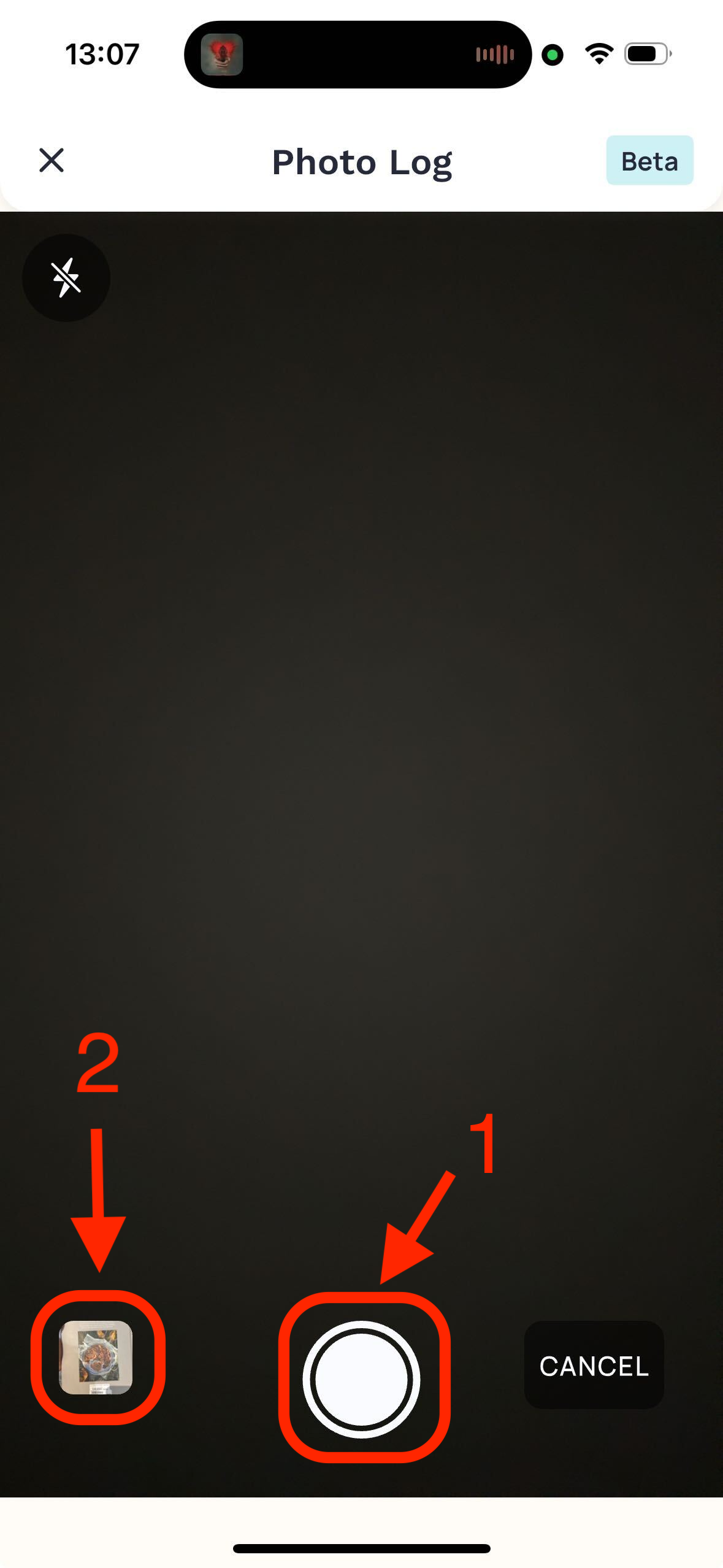
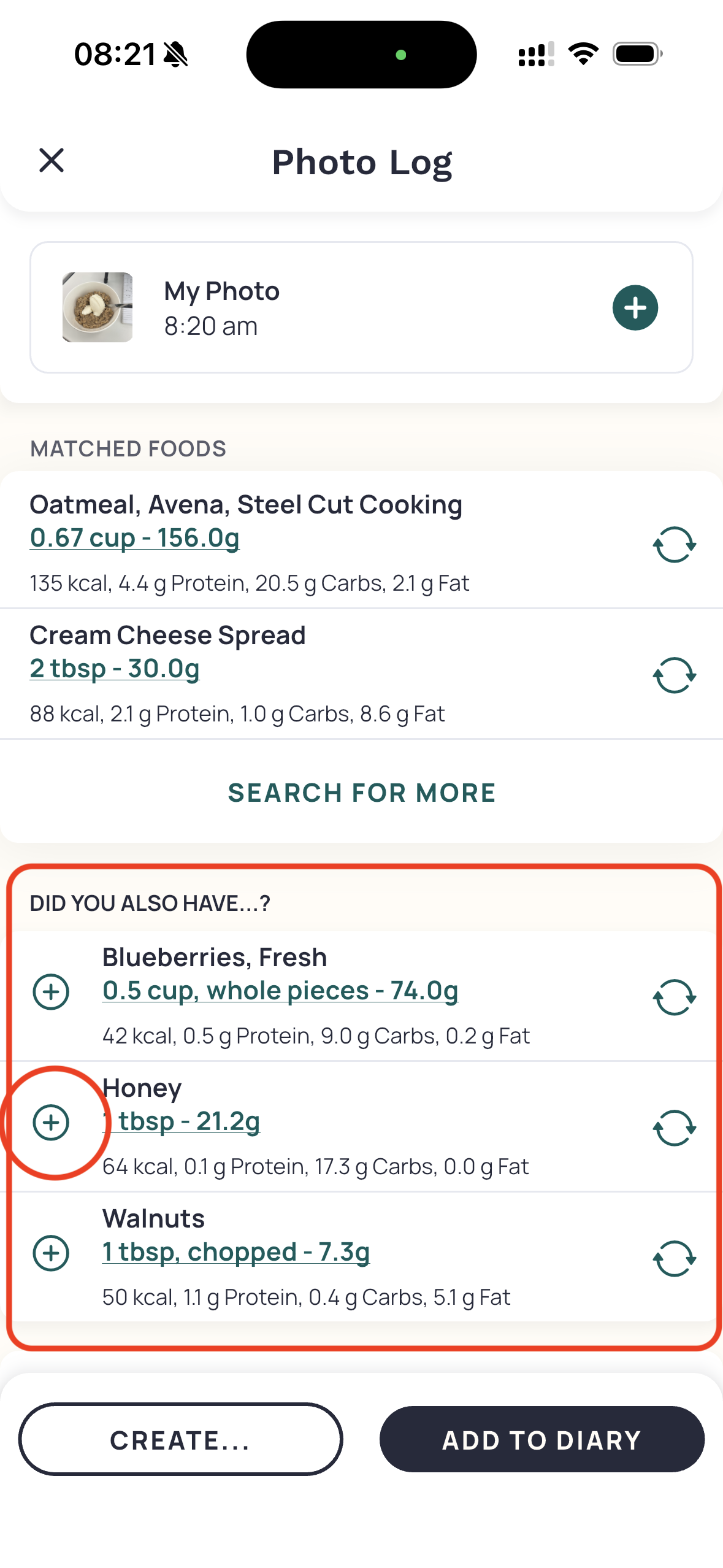
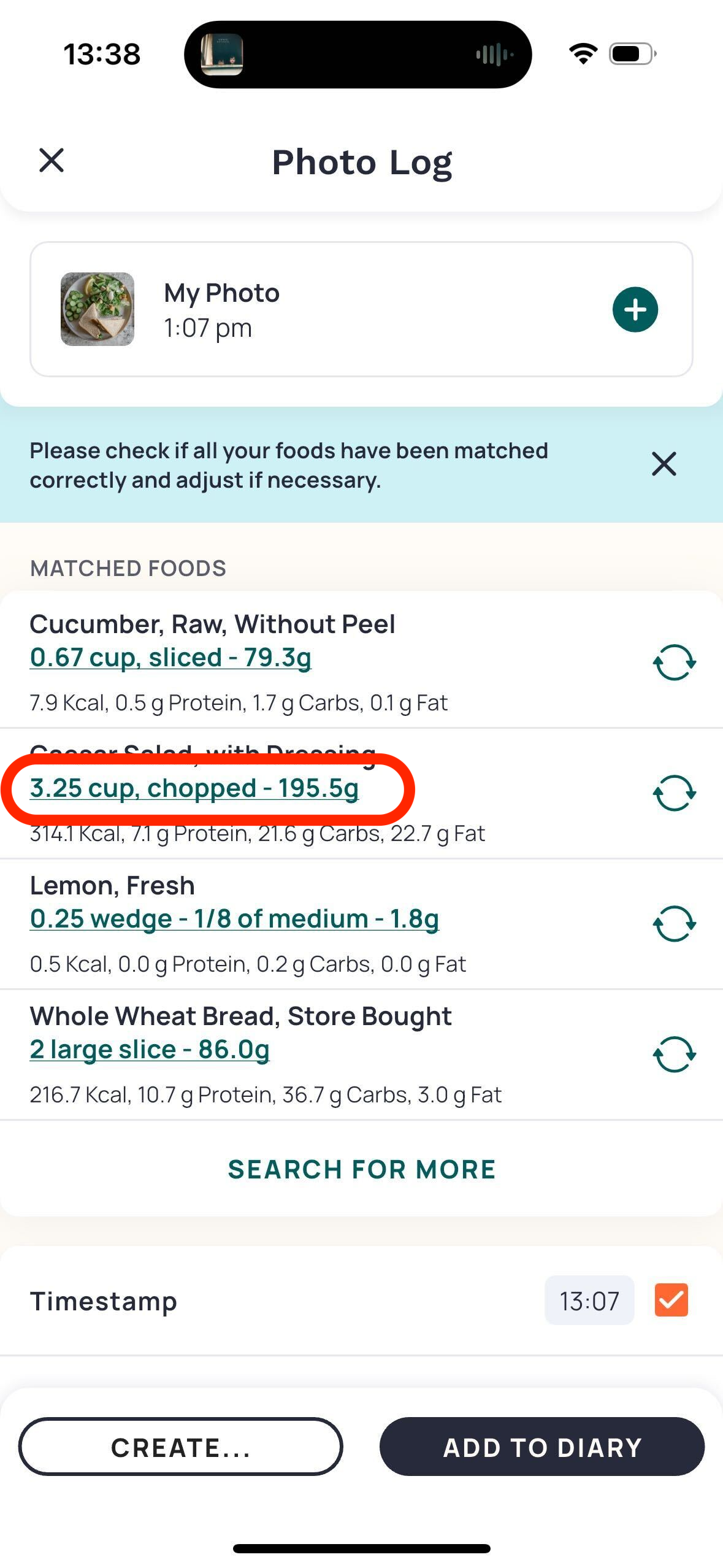
For the canonical photo capture, review and correction sequence, see workflow cr-f04 and annotated visuals cr-v03–cr-v05.[6]
Include replacement-photo behavior in the evaluation; the canonical workflow retains its documented scope.[6]
The inspected sequence covers camera, suggestions and portion-repair affordances, but the examples are different meals, not one continuous tested capture session. Source red arrows and circles are publisher annotations, not native controls.[6]
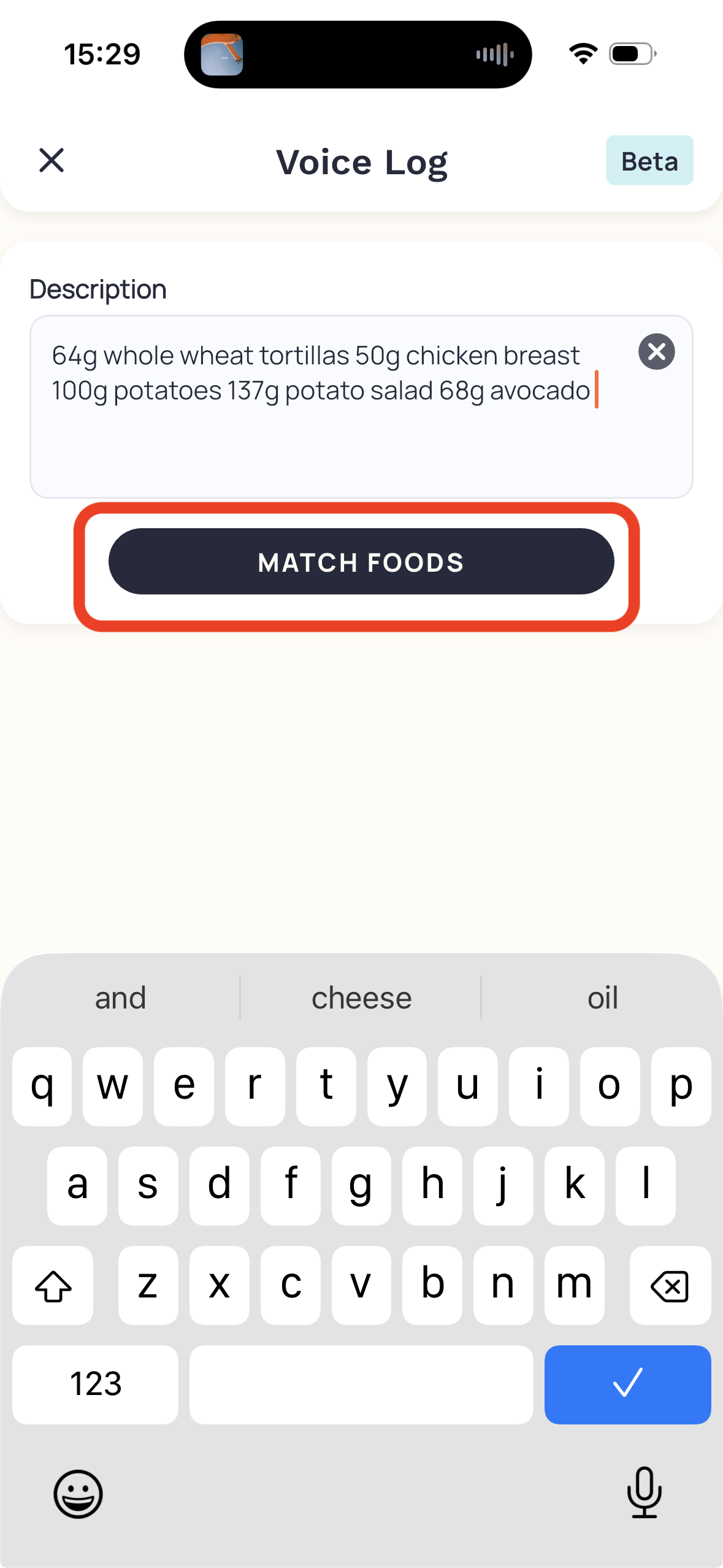
Gold Voice Log accepts speech or typed descriptions, matches them to foods and permits repair before addition.[7] Editing the description and matching again replaces the earlier results.[7] The keyboard screenshot proves that typed natural-language input belongs in the feature matrix; it should not be misclassified as ordinary keyword search simply because it shares a voice-branded entry point.[7]
Siri is a different trust model: Gold iOS users enable a shortcut, describe foods externally and receive a logging confirmation.[8] The next app visit reminds them to review Siri-marked entries.[8] Unlike in-app match review, this is a post-commit inspection path. An evaluation must include incorrect external commands, later discoverability and reversal, not just successful dictation.
5. Correction, reuse and historical integrity
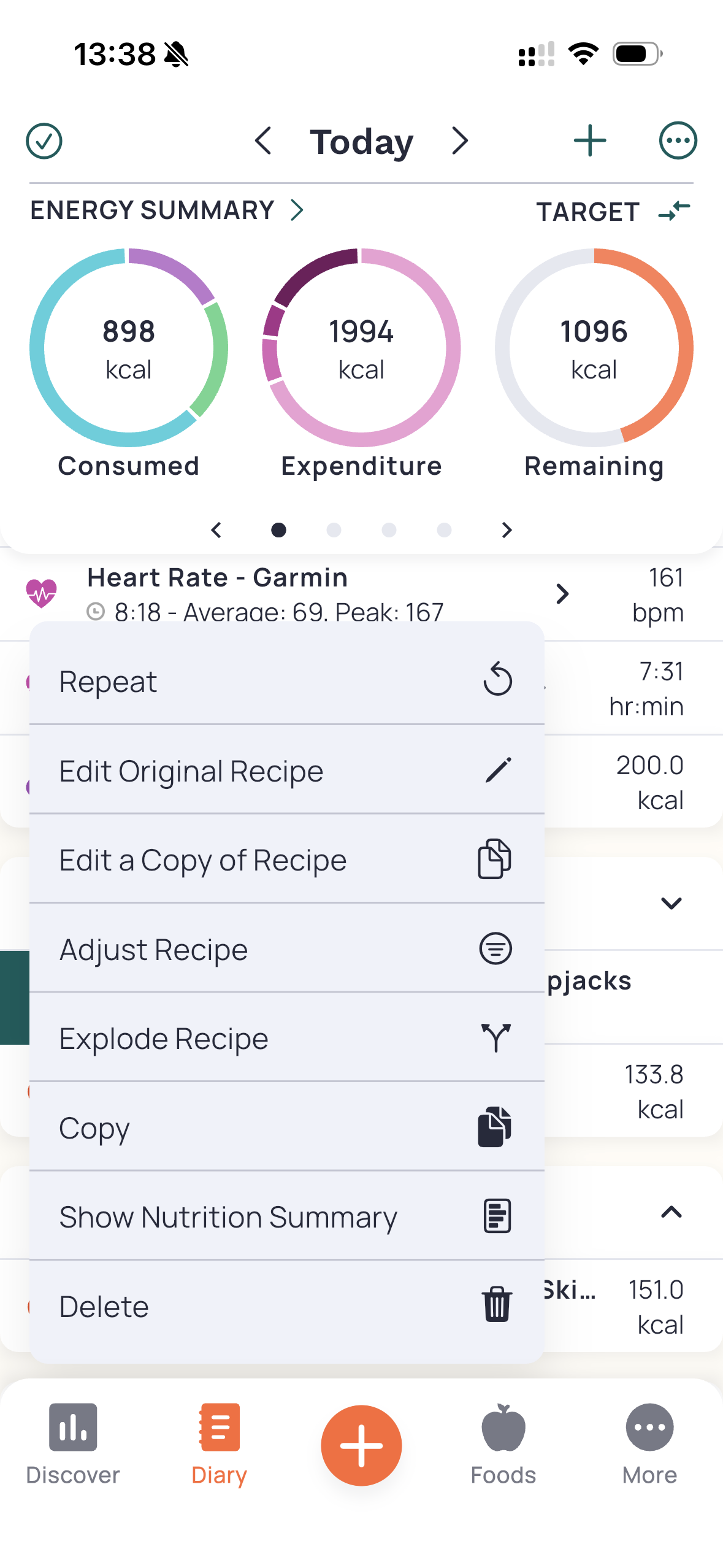
Tapping a diary item edits amount/unit/group; swiping exposes additional actions.[10]
For the canonical recipe-edit choices, see cr-f07 and cr-v07.[10] A completed day freezes editing until reopened.[10]
These names suggest intentional scope separation, but the precise propagation of each recipe change was not live-tested. That uncertainty is more important than counting the number of available menu items.
Copying can target one entry, selected entries, a group or a day, with destination-date/group paste and a Copy to Today shortcut.[11] Returning-user efficiency is not limited to favorites. Test wrong-day recovery, clipboard behavior across navigation and accidental repeated pastes; none of those durability details can be established from static instructions alone.
Custom meals bundle routinely co-eaten items.[12] They can be created from Foods or a diary selection and later exploded into constituents; the app offers a once-versus-always preference for explosion.[12] This is a collection abstraction rather than merely a recipe alias. It supports editing breakfast components independently while retaining a reusable meal definition.
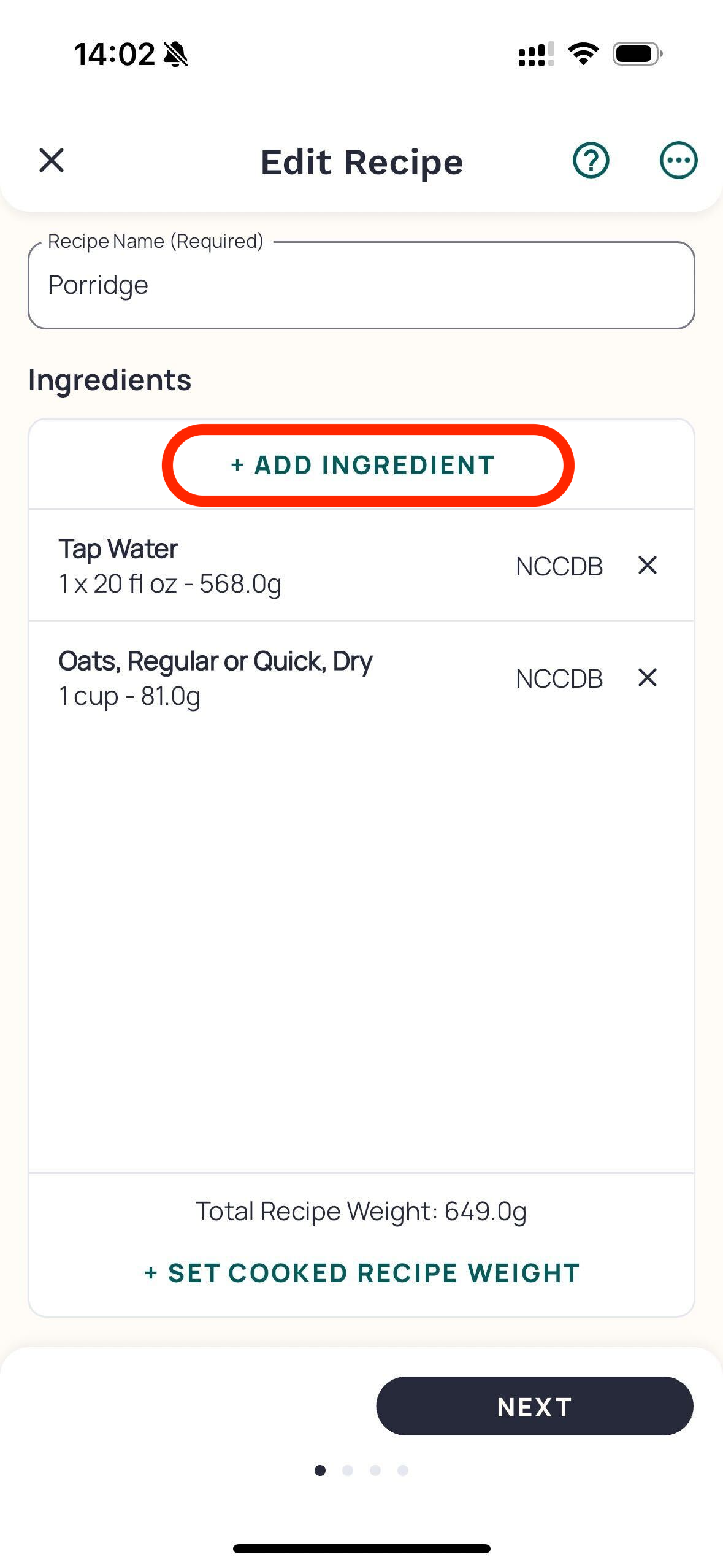
Custom recipes model ingredient quantities and a serving basis, followed by notes and nutrition review.[13] The documentation warns that weight-based versus serving-based mode cannot be changed after saving.[13] The ingredient screenshot surfaces each ingredient's source alongside its quantity, with cooked weight and Next visible.[13] The lock-in makes early explanation and recoverable duplication particularly important.
Cooked recipe weight accounts for cooking-related weight changes; the documented adjustment affects water while preserving other nutrients before portion scaling.[15] Users can edit or revert it.[15] This is unusually relevant to real kitchen behavior: a cooked dish's final mass differs from a sum of raw ingredients. The dossier describes the product mechanism, not laboratory validation of every cooking assumption.
Gold recipe import accepts a URL or manually pasted ingredient lines.[14] It presents original versus matched descriptions and blocks saving while unresolved matches remain; users can replace, resize or remove problematic items.[14] This is a stronger correction contract than a silent best guess. An importer benchmark should include unit ambiguity and substituted ingredients, not merely a valid recipe URL.
Gold repeat items are configured with portion, group, days and optional timing, but users still tap the daily Log Items prompt.[39] Recurrence can be disabled or deleted.[39] Do not describe this as unconditional automatic consumption logging. That distinction is important for skipped breakfasts, travel and supplements taken inconsistently.
Diary groups support custom labels, group-specific shortcuts and group reuse.[45] Creating a meal/recipe from a group saves a reusable definition without replacing the original diary items.[45] The help's phrase “Quick Add” refers to shortcut configuration here; a standalone calories-only quick-add mode was not established by this research.
6. Review, trends and planning boundaries
Daily Report includes energy, macro and nutrient sections, with individual nutrient bars opening contributor/target details.[48] It distinguishes remaining-to-target from consumed-versus-burned balance, and renders targets met, exceeded or not set differently.[48] The design implication is to preserve those semantic differences in any simplified summary; one generic red/green score would hide why a value matters.
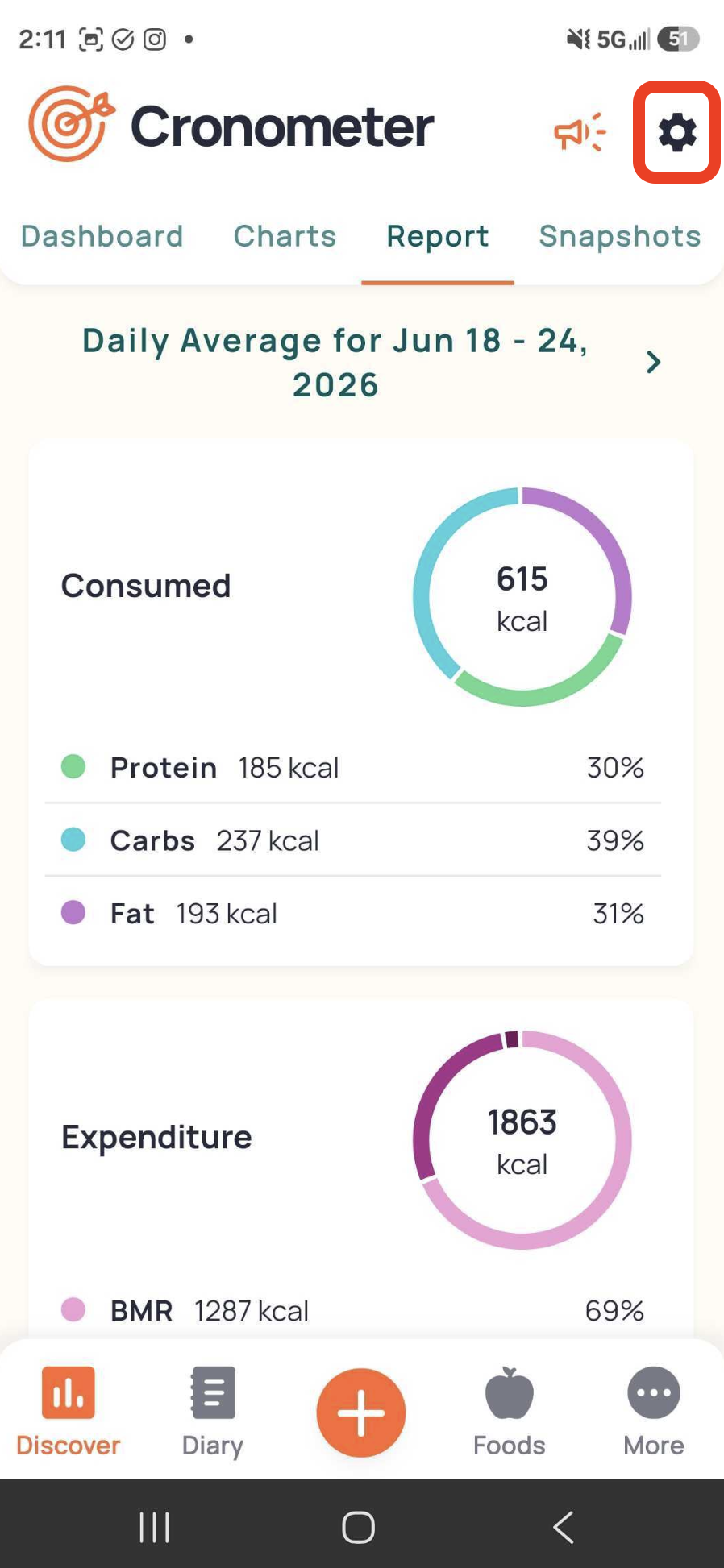
Period Nutrition Report averages daily data.[21] Basic access covers the recent week; Gold enables custom ranges.[21] Include-today, supplement and complete/nonempty/all-day choices change what enters the calculation.[21] The Android screenshot places report beside Dashboard, Charts and Snapshots.[21] Filtering incomplete days is valuable, but the comparison denominator needs to remain understandable to avoid apparent improvement caused by exclusion alone.
Default charts include energy consumed and a single metric, initially weight.[22] Gold expands chart types and permits custom charts; chart settings include date/day filters, contextual options and dashboard placement.[22] A plotted weight history is documented; a separately smoothed weight-trend algorithm is not. The chart article itself is uneven about custom-range availability, so exact Basic range controls belong in the test checklist.
Macro Scheduler adds named templates, weekday scheduling and single-day overrides.[40] Editing an existing template can change past uses, whereas assigning a new template applies forward; copying preserves prior target definitions.[40] This is planning of targets, not evidence of an end-to-end generated meal plan, grocery list or compliance-adaptive weekly check-in.
Web Snapshots allows image upload with accompanying vitals, title and notes, plus download/delete actions.[34] The mobile Report screenshot also visibly contains a Snapshots tab, and Pro-mobile documentation names client Snapshots.[21][36] Consumer-mobile operation and tier entitlement were not directly established; neither absence nor full parity should be inferred from the tab alone.
7. Activity, integrations and everyday support
Manual exercise records use type, effort and duration to estimate energy from adjusted activity values; custom exercise is also supported.[42] This is an activity-energy boundary, not a documented strength-training program builder, set/rep logger or workout-progression engine. Adjacent fitness capabilities must not be smuggled into nutrition parity merely because exercise appears in the diary.
Biometric entry supports measurement search, values, units and diary grouping.[43] Custom biometrics and timestamps carry Gold distinctions.[43][1] Keep standard measurements separate from customizable tracked variables when comparing products: both may look like “body metrics,” but the extensibility and analysis value differ.
Integration documentation describes account linking and per-stream preferences.[24] It notes a WHOOP strength-training import limitation and provides a broad ecosystem overview.[24] Apple Health requires mobile permissions, supports retrospective backfill and exposes time-series data; Android Health Connect has its own directional import/export list and disconnect/data-deletion controls.[25][26] A generic “syncs with health” checkbox loses these meaningful differences.
There is conflicting baseline advice: the broad integration overview recommends Sedentary, while Apple Health and expenditure-specific guidance tell users to select the baseline fitting everyday life.[24][25][18] This dossier does not invent a reconciliation. Verify the current provider-specific behavior with a controlled exercise event and inspect which baseline/activity components change.
Water tracking distinguishes explicitly logged drinking water from total water including food.[41] The widget supports additions/removals and custom amounts, while Gold permits customizing the default container.[41] This is a useful example of two related measures that should not be collapsed into one apparently universal hydration number.
Food reminders depend on whether anything has been logged by the chosen time, with optional group-specific checks; weight reminders are based on elapsed time since the last measurement.[31] These are behavior-aware prompts rather than merely repeating alarms. Test notification permissions, timezone changes and whether an incomplete meal still suppresses its reminder.
Gold fasting includes scheduled or open-ended periods, recurrence, history edits, chart overlays and an optional warning when adding food during a fast.[30] It is integrated with logging but remains a separate tracked object. This research makes no recommendation to fast and no efficacy claim about the feature.
Official iOS widget documentation lists energy, fasting, water and streak views, whereas the Android article lists energy and fasting categories.[32][33] That is an observed documentation difference, not sufficient proof of Android feature absence. Device-picker inspection is required for a true platform-parity claim.
8. Coaching, collaboration and account lifecycle
Crono Coach is a Gold in-app assistant for interpreting logged information, goals and preferences.[38] Setup collects goals/restrictions and optional notes before a disclaimer; hiding the card is documented through dashboard settings.[38] Do not equate that UI opt-out with deletion of previously processed data without further privacy evidence. Advice quality and safety were not tested.
Friends on Gold exchange custom foods/recipes, not access to each other's diaries.[35] Professional access is separately accepted/rejected and can be stopped.[35] This boundary is important: sharing a recipe with a friend is not granting clinical-style longitudinal visibility. A social feature score should reflect the actual collaboration model rather than implying a community feed.
Pro introduces client selection, a selected-client diary and reports, plus a separate personal Gold profile.[36] The inspected switcher labels Gold and Pro clearly.[36] Professional documentation also describes invitations, business information and client history access after acceptance.[37] No human coach is automatically provided by purchasing Pro; it is software for a professional relationship.
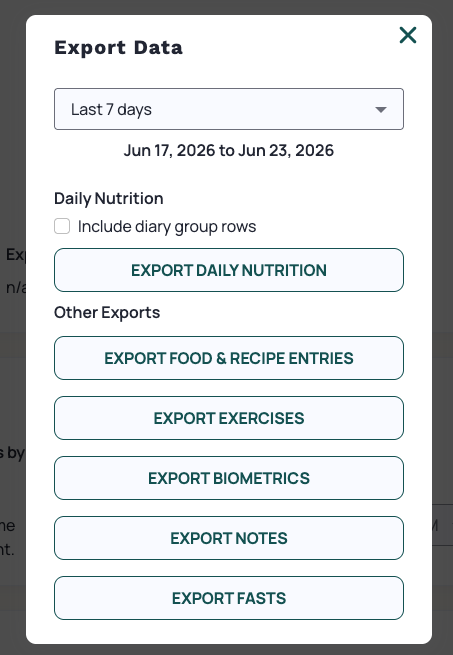
Web account export offers CSV retrieval by date and data type, including daily nutrition versus item records.[28] A daily-nutrition option includes meal-group rows.[28] The inspected dialog confirms separate export buttons and the grouping checkbox.[28] Export availability must remain distinct from Gold printable reporting, and actual CSV schema/timezone fidelity remains untested.
Mobile and web provide bulk deletion and full account deletion with irreversible consequences.[27][28] Mobile also exposes notification/privacy choices and optional two-factor authentication.[27] Export first is an evaluation precaution, not an observed automated safety step. Deleting synchronized data in a health platform and deleting the Cronometer account are separate scopes.[26] Cancellation follows purchase origin: web uses Do Not Auto-Renew; iOS and Android purchases use their respective subscription-management surfaces.[29] Account deletion must not be assumed to cancel store billing. No paid subscription was changed during this research, and external store screens were not inspected.
9. Design judgment and hands-on acceptance checklist
The strongest design pattern is inspectability at the point of correction: provenance beside portions, explicit recipe operations, candidate repair before AI commit and target arithmetic near target settings.[4][10][16] This is an analyst interpretation of visible/documented structure, not measured usability. The tradeoff is density: more control exposes more concepts, scopes and hidden menus that must be learned.
The highest-priority experiment is not “How quickly can I add dinner?” It is “Can I notice and repair an incorrect dinner, then verify the correction tomorrow and on another device?” Use synthetic test records and record OS, app version, region, tier and data source. Test copy versus original edits, recipe retirement, AI rematching, Siri post-commit repair, complete-day reopening and target-template history separately.
Additional acceptance checks are: airplane-mode capture and reconnection; Basic/Gold downgrade behavior; Android widget inventory; exact Basic chart ranges; one-provider energy reconciliation; CSV row/timezone stability; mobile Snapshots entitlement; Coach opt-out semantics; and deletion versus billing warnings. These are open questions, not inferred product failures. The structured dossier contains 19 documented flows and a test-oriented question list to guide later authorized hands-on work.
Artifacts: app.json is the machine-readable matrix; visuals.html is the annotated evidence gallery; assets/ retains originals, labeled variants and contact sheets; sources/ holds articles and ledgers; audit/verification.json records computed checks. All 40 feature keys named in the research contract are preserved; not-found means unknown rather than absent.
Sources
[1] https://support.cronometer.com/api/v2/help_center/en-us/articles/360028026971.json — Subscription Types [2] https://support.cronometer.com/api/v2/help_center/en-us/articles/360021677792.json — Mobile - Quick Start Guide [3] https://support.cronometer.com/api/v2/help_center/en-us/articles/360021897491.json — Web - Quick Start Guide [4] https://support.cronometer.com/api/v2/help_center/en-us/articles/360018955211.json — Mobile - Add a Food [5] https://support.cronometer.com/api/v2/help_center/en-us/articles/360020441392.json — Mobile - Scan Food [6] https://support.cronometer.com/api/v2/help_center/en-us/articles/39013533811092.json — Mobile - Photo-Logging [7] https://support.cronometer.com/api/v2/help_center/en-us/articles/47549391461780.json — Mobile - Voice Logging [8] https://support.cronometer.com/api/v2/help_center/en-us/articles/47664884315412.json — Mobile - Siri Voice Logging [9] https://support.cronometer.com/api/v2/help_center/en-us/articles/360018593112.json — Mobile - Diary Overview [10] https://support.cronometer.com/api/v2/help_center/en-us/articles/360019003171.json — Mobile - Edit Diary Entries [11] https://support.cronometer.com/api/v2/help_center/en-us/articles/360018695932.json — Mobile - Copy & Paste [12] https://support.cronometer.com/api/v2/help_center/en-us/articles/16510542794004.json — Mobile - Create Custom Meal [13] https://support.cronometer.com/api/v2/help_center/en-us/articles/360019870111.json — Mobile - Create a Custom Recipe [14] https://support.cronometer.com/api/v2/help_center/en-us/articles/4403966087828.json — Mobile - Recipe Importer [15] https://support.cronometer.com/api/v2/help_center/en-us/articles/4407646573588.json — Mobile - Set a Cooked Recipe Weight [16] https://support.cronometer.com/api/v2/help_center/en-us/articles/33113157685652.json — Mobile - Macro & Energy Targets [17] https://support.cronometer.com/api/v2/help_center/en-us/articles/32978027080980.json — Mobile - Weight Goal [18] https://support.cronometer.com/api/v2/help_center/en-us/articles/33132110153492.json — Mobile - Energy Expenditure [19] https://support.cronometer.com/api/v2/help_center/en-us/articles/360020571571.json — Mobile - Edit Nutrient Targets [20] https://support.cronometer.com/api/v2/help_center/en-us/articles/360018239472.json — Data Sources [21] https://support.cronometer.com/api/v2/help_center/en-us/articles/360019864891.json — Mobile - Nutrition Report [22] https://support.cronometer.com/api/v2/help_center/en-us/articles/360019864311.json — Mobile - Charts [23] https://support.cronometer.com/api/v2/help_center/en-us/articles/10684426724116.json — Mobile - Dashboard [24] https://support.cronometer.com/api/v2/help_center/en-us/articles/360018579072.json — Devices Integration Overview [25] https://support.cronometer.com/api/v2/help_center/en-us/articles/360020734212.json — Apple Health & Apple Watch [26] https://support.cronometer.com/api/v2/help_center/en-us/articles/22731903751316.json — Health Connect [27] https://support.cronometer.com/api/v2/help_center/en-us/articles/360019870072.json — Mobile - Account [28] https://support.cronometer.com/api/v2/help_center/en-us/articles/360018760151.json — Account Settings [29] https://support.cronometer.com/api/v2/help_center/en-us/articles/360028873772.json — How do I cancel my Gold Subscription? [30] https://support.cronometer.com/api/v2/help_center/en-us/articles/360036016612.json — Mobile - Fasting [31] https://support.cronometer.com/api/v2/help_center/en-us/articles/360051718511.json — Mobile - Notifications [32] https://support.cronometer.com/api/v2/help_center/en-us/articles/4407693442324.json — iOS Home Screen Widgets [33] https://support.cronometer.com/api/v2/help_center/en-us/articles/4417368926100.json — Android Home Screen Widgets [34] https://support.cronometer.com/api/v2/help_center/en-us/articles/360018570251.json — Snapshots [35] https://support.cronometer.com/api/v2/help_center/en-us/articles/360058911291.json — Mobile - Sharing [36] https://support.cronometer.com/api/v2/help_center/en-us/articles/36866328492564.json — Pro Mobile - Getting Started [37] https://support.cronometer.com/api/v2/help_center/en-us/articles/360021361232.json — Getting Started with Cronometer Pro [38] https://support.cronometer.com/api/v2/help_center/en-us/articles/49995994334100.json — Mobile - Crono Coach [39] https://support.cronometer.com/api/v2/help_center/en-us/articles/16510562495764.json — Mobile - Set Repeating Foods [40] https://support.cronometer.com/api/v2/help_center/en-us/articles/4406120372244.json — Mobile - Macro Scheduler [41] https://support.cronometer.com/api/v2/help_center/en-us/articles/18018883315988.json — Mobile - Water Tracking [42] https://support.cronometer.com/api/v2/help_center/en-us/articles/360020448572.json — Mobile - Add Exercise [43] https://support.cronometer.com/api/v2/help_center/en-us/articles/360020717131.json — Mobile - Add a Biometric [44] https://support.cronometer.com/api/v2/help_center/en-us/articles/33231653421588.json — Mobile - Fixed Targets [45] https://support.cronometer.com/api/v2/help_center/en-us/articles/360019002571.json — Mobile - Diary Groups [46] https://support.cronometer.com/api/v2/help_center/en-us/articles/360019866351.json — Mobile - Create a Custom Food [47] https://support.cronometer.com/api/v2/help_center/en-us/articles/360019865411.json — Mobile - Foods Tab [48] https://support.cronometer.com/api/v2/help_center/en-us/articles/32689033683220.json — Mobile - Daily Report